The Botting Trap
It took me 150 accounts and a $15,000 loss to understand something embarrassingly simple: botting isn't passive income. It's a treadmill with a trapdoor.
In Part 1, I told you how I made my first $1,000 selling virtual goods. That first taste of real money felt like a cheat code for life. Naturally, I wanted to scale it.
So I did what most people in RMT eventually do: I started botting. More accounts, more output, more gold. It made perfect sense on paper.
In practice, it almost broke me.
Act 1The Treadmill
At my peak, I was running 150 accounts. About 30 were actively botting at any given time. The rest were moving stock, managing transfers, holding inventory, getting boosted — all the "support" work that nobody talks about when they sell you on the dream of passive income.
My daily routine looked like this: wake up, check which bots crashed overnight, restart them, manage inventories, move gold between accounts, check prices, adjust farms. Then do it all again in the evening.
Twice a day. Every day.
But the real killer wasn't the workload. It was the margin pressure.
Every botter dumps the same items on the same markets. More output from you means more supply, which means lower prices for everyone — including you. So you scale more to compensate. Which makes margins worse. Which means scaling more.
I was running faster just to stay in the same place. And I kept telling myself this was "passive income."
Act 2The $15,000 Reset
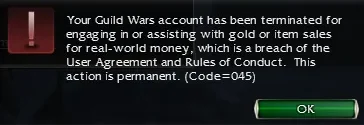
Then came the ban wave.
Spoiler: No one is ready for a ban wave.
150 accounts flagged in 48 hours. All of them. Including the 120 that weren't even botting — just holding stock, transferring items, doing completely legitimate things. Didn't matter. Guilt by association. Gone.
Estimated loss: ~$15,000 in inventory/accounts, (+ time invested).
One event. Total reset. Back to zero.
That one stung. Still does, honestly.
But here's the thing I got wrong for a long time: I thought the ban was the problem.
It wasn't. The ban was just the moment I finally saw what I'd actually built. A production machine with a single point of failure. No customer list. No reputation outside of "bulk gold supplier." No safety net. Just inventory that could vanish overnight — and did.
The output was there. The setup wasn't resilient.
The Turn
The fix was embarrassingly simple. So simple that it took me years and $15,000 to see it.
I stopped selling to resellers. And I started selling directly to players.
Same market. Same games. Same items. But instead of dumping stock at 60% of market price to middlemen, I did something different: I built a storefront. I got reviews. I diversified beyond a single item type. I made buyers come back.
Bulk dumps at 50-60% of market price
Long negociations with multiple sellers
No reputation built — you're invisible
Compete purely on price (race to bottom)
Zero compoundingSell at market price with trust premium
Buyers come back weekly, monthly
Reviews and reputation snowball
Compete on trust and reliability
Compounding revenueThe math isn't complicated once you see it: a reseller buys from you once at 60%. A loyal customer buys at full price and comes back next week. One of these compounds. The other doesn't.
Less production. Less risk. Way more profit.
And the best part? I didn't even need to bot anymore. There are plenty of suppliers who handle production. Sourcing is a commodity. What's scarce is the distribution layer — the storefront, the trust, the returning customers. That's where the real margin lives.
I stopped trying to be the biggest producer and started being the most trusted seller. Everything changed.
Distribution Beats Production
Everyone in RMT can farm. Everyone can find a bot. Everyone can produce.
Not everyone builds something that buyers trust enough to come back to. That's the gap. And it's not about volume — it's about distribution.
The sellers who survive patches, ban waves, and market crashes aren't the ones with the most accounts. They're the ones whose customers wait for them to restock instead of going to a competitor.
I spent years optimizing the wrong thing. Production felt productive — more accounts, more output, more numbers going up. But none of it compounded. Distribution does.
This applies way beyond RMT, by the way. In any business — e-commerce, freelancing, content creation — the people who win long-term are the ones who own the relationship with the customer. Not the ones who can produce the most, the cheapest.
If you're producing a lot and not seeing the margins you expected, the problem probably isn't your farm. It's everything that happens after the farm.
P.S. I spent the last few months building a system to help a handful of sellers fix exactly this — stop optimizing production and start building distribution. It's called RMT Accelerator.